 dEdge
I. Introduction
Why Infrastructure Matters More Than Ever in DeFi Trading
Trading edge in crypto isn’t just about the right token, the right timing, or even the right strategy — it’s about pipeline superiority.
From order routing to transaction propagation, the real alpha lives under the hood. Whether you’re deploying bots, running copytrade dashboards, or managing high-frequency DeFi strategies, one fact is clear:
If your infrastructure lags, your strategy loses.
And in ecosystems like Solana, where trades finalize in sub-second blocks and network spikes can drown your transactions, mastering infra isn’t optional — it’s survival.
The Latency War in Solana: Staking, Speed, and Survivability
Solana is a playground for speed-focused execution — but it’s also a battlefield of competing traffic, validator bandwidth, and MEV exploitation.
To win in this environment, traders are building with:
- Jito: Liquid staking with MEV kickbacks
- bloXroute: Ultra-fast blockchain data delivery
- Staked Weight Quality of Service (SWQoS): Network-level priority access based on stake
These aren’t just tools — they’re infrastructure levers. Pull them right, and you go faster, execute cleaner, and trade smarter.
🎯 Who This Article Is For
This guide is tailored for:
- Copytraders looking to match wallet trades without getting sandwiched
- High-frequency trading (HFT) teams needing ultra-low-latency propagation
- DeFi protocol developers optimizing RPCs, relayers, and validator connections
- Quant strategists seeking alpha preservation at the infra level
If you’re building, trading, or managing edge-sensitive strategies on Solana — this is for you.
II. Jito: MEV-Aware Liquid Staking on Solana
What Jito Is
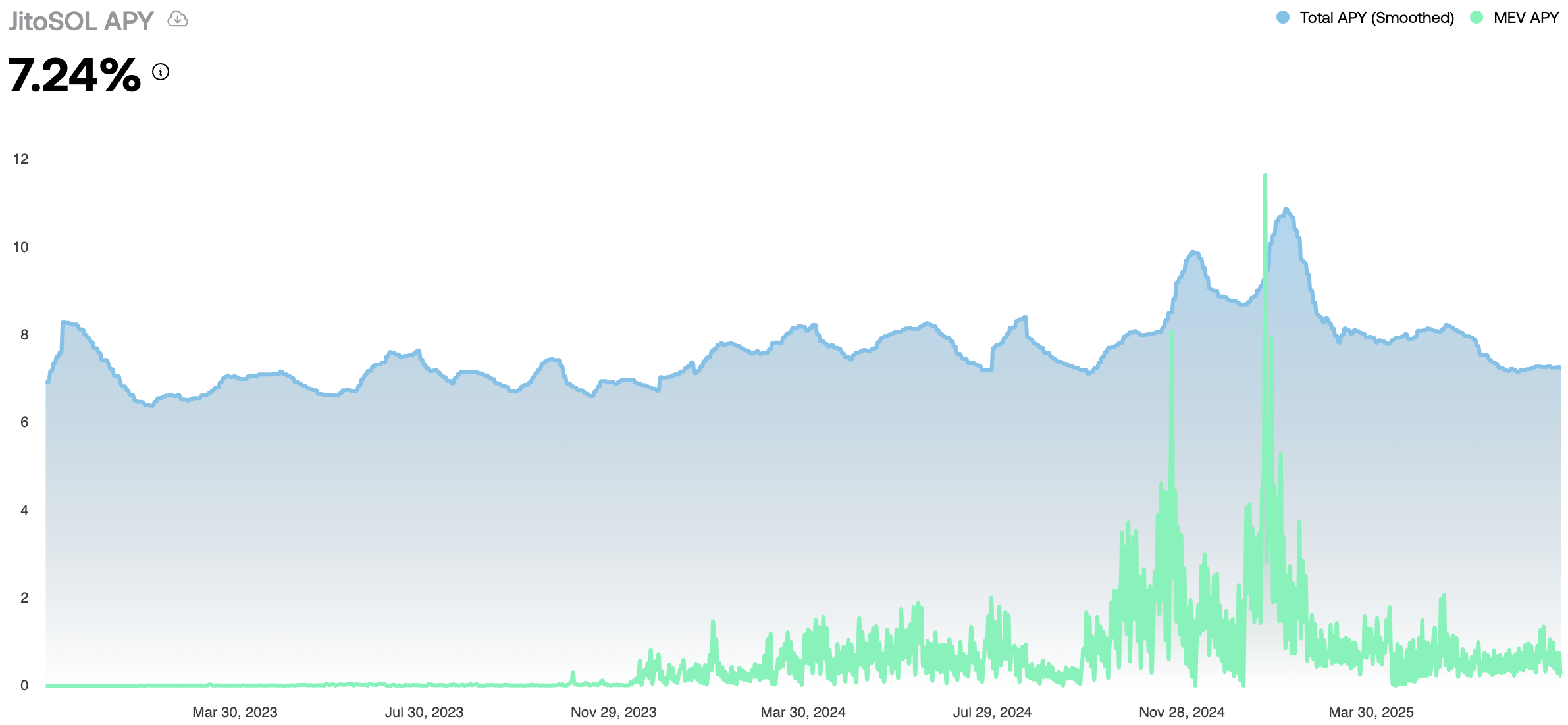
Jito is a decentralized protocol that merges liquid staking and MEV extraction into a single, capital-efficient system. It lets SOL holders stake their tokens, earn staking rewards, and simultaneously capture part of the MEV profits generated by Solana’s validators — all while keeping their capital liquid through a derivative token: JitoSOL.
It’s staking with a side of alpha — and it’s fast becoming a critical building block for infrastructure-conscious DeFi players.
How It Works
- Stake SOL → Receive JitoSOL
- Users deposit SOL into Jito’s protocol and receive JitoSOL, a liquid staking derivative token. JitoSOL can be freely traded, used in DeFi protocols, or deployed in yield strategies — without losing staking yield.
- MEV Profits Shared with JitoSOL Holders
- Jito doesn’t just stake. It routes stake to MEV-optimized validators that run Jito relays, capturing profits from transaction ordering, sandwiching, and backrunning in validator blocks.
- These MEV earnings are shared back with stakers, meaning JitoSOL holders receive both staking yield and MEV dividends.
Governance with the JTO Token
The JTO token is more than a ticker — it’s a governance key.
- Holders vote on:
- Protocol fee parameters
- Delegation strategies (which validators receive stake)
- Treasury spending and MEV-sharing logic
- Community-driven governance ensures that Jito remains transparent, adaptive, and aligned with stakers’ interests.
Why Jito Matters to Traders
Whether you’re managing a fund, trading programmatically, or optimizing idle capital, Jito unlocks a trifecta:
- Composability + Liquidity: JitoSOL can plug into DeFi yield strategies or lending protocols without sacrificing validator rewards
- Enhanced Yields: Traders get access to MEV rewards usually reserved for validators
- MEV Transparency: Jito’s relays and reward system align with users, not against them — a stark contrast to dark mempools and silent frontrunning
Jito doesn’t just give you exposure to Solana’s speed — it gives you a slice of the blockbuilder’s profit pie.
III. BloXroute: Blockchain Distribution for Speed-Critical Execution
What bloXroute Offers
If Solana is a racetrack, bloXroute is the Formula 1 pit crew — designed to reduce latency, eliminate lag, and deliver transactions faster than anyone else.
At its core, bloXroute operates a Blockchain Distribution Network (BDN) — a global infrastructure backbone that accelerates how quickly:
- Blocks are propagated to the network
- Transactions are broadcast to validators
- Data is received and acted upon by trading engines
The difference between landing a trade and missing the move? Often just milliseconds. That’s the window bloXroute targets.
Tools for Traders
bloXroute doesn’t just speed things up — it provides actionable infrastructure for anyone deploying real-time strategies:
- Low-Latency Trader APIs
- Built for speed-focused firms, these APIs help traders submit orders faster, with less propagation delay and greater execution certainty.
- Private Transaction Submission (MEV Protection)
- Want to avoid the mempool? bloXroute offers private relay paths that bypass the public queue, protecting your trade from:
- Frontrunning
- Sandwich attacks
- MEV sniping bots
These aren’t just dev tools — they’re alpha-preservation systems for smart money traders and platforms.
Multi-Chain, Neutral Backbone
bloXroute’s reach isn’t limited to Solana. It supports:
- Ethereum (including Flashbots-style submission)
- BNB Chain
- Polygon
- Solana (via ultra-fast validator relay paths)
And unlike some relayer protocols, bloXroute is chain-agnostic and participant-neutral — it doesn’t favor searchers, validators, or block builders. It’s pure infrastructure, available to anyone who needs speed and reliability at scale.
Why It Matters to Traders
Let’s break it down for performance-driven traders and copytrade platforms:
Execution Edge in HFT Environments
- If your strategy relies on being first — to react, to replicate, or to fill — bloXroute helps you win the race.
- Lower latency can affect execution, but does not ensure a better price or a profitable exit.
Fewer Dropped Transactions
- During network congestion, transactions can be lost or delayed. bloXroute’s direct relay infrastructure minimizes those failures, improving:
- Success rates
- Transaction finality
- Strategy consistency
Latency-Sensitive Copytrading? bloXroute Is a Must
- Copytrading platforms that mirror top wallets or manage bot fleets can’t afford delay.
- bloXroute ensures your copy lands as close to the source trade as possible — not after the alpha’s been front-run.
In modern trading, your infra is your edge. bloXroute gives you the bandwidth, delivery, and timing precision to stay competitive — even when the market is chaos.
IV. Staked Weight Quality of Service (SWQoS): Bandwidth Based on Stake
What SWQoS Is
Staked Weight Quality of Service (SWQoS) is Solana’s answer to the question: who gets to talk louder when the network gets noisy?
It’s a resource allocation mechanism where:
- Validators (or RPC nodes) with more stake get more bandwidth — literally.
- If you control 10% of total stake, you’re allowed to send 10% of packets to block producers.
This isn’t just about fairness. It’s about protecting the integrity of the network during high-volume moments — and ensuring that important, legitimate transactions don’t get drowned in spam.
Purpose & Design
Solana’s SWQoS system exists to address a set of increasingly urgent problems:
Sybil Resistance
- Prevents low-stake or malicious actors from flooding the network with junk traffic
Spam Mitigation
- In high-load moments (NFT mints, liquidations, airdrop farming), SWQoS ensures high-quality nodes don’t lose access
Throughput Fairness
- Allocates network capacity proportionally to stake — giving well-aligned participants priority access under congestion, without guaranteed transaction inclusion
It’s like traffic lanes based on merit: bigger validators get wider lanes.
Why SWQoS Matters to dApps and Traders
This isn’t just a validator problem — it directly affects dApp performance and trader execution.
- RPC providers with strong SWQoS positioning get better packet prioritization
- Exchanges, bots, and protocols that rely on those providers see higher transaction reliability
- During congestion events (e.g., MEV surges, memecoin frenzies), trade rejection rates can spike — unless you’re in the SWQoS fast lane
For copytrading platforms and HFT strategies, every dropped packet = a missed trade.
If your infrastructure doesn’t negotiate access via SWQoS, you’re gambling with execution reliability.
V. Infrastructure Synergies: Building a Reliable Trading Stack
So how do serious teams protect their edge on Solana?
They stack infrastructure intelligently — combining tools that optimize capital efficiency, transaction speed, and network access.
Here’s how the smart ones are doing it:
Stake with Jito → Earn More from MEV
- Turn SOL into JitoSOL
- Earn base staking rewards + a cut of MEV profits
- Still retain access to DeFi strategies — borrow, lend, LP with JitoSOL
Passive yield meets alpha capture.
Route with bloXroute → Trade at Lightspeed
- Use bloXroute’s BDN for fastest transaction propagation
- Submit orders via low-latency APIs and private relay paths
- Avoid the mempool, avoid MEV traps, land before the crowd
Faster execution = better fills, lower slippage, more profits.
Choose SWQoS-Aware RPCs → Lock in Network Priority
- Work with infrastructure providers who maintain significant Solana stake
- Ensure your transactions ride higher-quality lanes during congestion
- Get reliable performance when the network is under pressure
Because even the best trade logic fails if it never hits the block.
Infrastructure Is Alpha
These three pillars — Jito, bloXroute, and SWQoS — are more than optional upgrades. Together, they form a resilient, performant trading stack that:
- Minimizes tail risk
- Reduces failed transactions
- Optimizes capital deployment
- Gives copytraders and quants a measurable edge
In high-speed crypto markets, your infrastructure is your strategy. Treat it that way.
VI. Conclusion
In the world of high-speed, data-driven crypto trading, infrastructure isn’t just backend — it’s a competitive edge.
The difference between success and failure isn’t always in your trading logic. Sometimes, it’s in:
- The validator you stake with
- The path your transaction takes to reach the chain
- The lane your RPC rides on during congestion
For copytraders, quants, and DeFi builders, that means one thing: staking, bandwidth, and propagation aren’t just technical details — they’re part of your core strategy.
Whether you’re chasing fractions of a second in execution, maximizing yield on idle capital, or ensuring your bot’s instructions actually land, the infrastructure layer is where edge gets built — or lost.
Use the tools intentionally:
- Jito to earn more from your stake while staying DeFi-ready
- bloXroute to send faster, smarter, and stealthier
- SWQoS-aware RPCs to ensure you’re prioritized when the network’s under fire
Because in Solana’s hyper-competitive landscape, alpha isn’t just about the trade.
It’s about how you land it.
Put the context to work.
Start with a free public wallet report. Look at the analysis window, the returns and the details.
Research a wallet ↗